
GearAndSteel is reader-supported. As an Amazon Associate I earn from qualifying purchases. When you buy through links on our site, we may earn an affiliate commission, at no extra cost to you. Learn more.
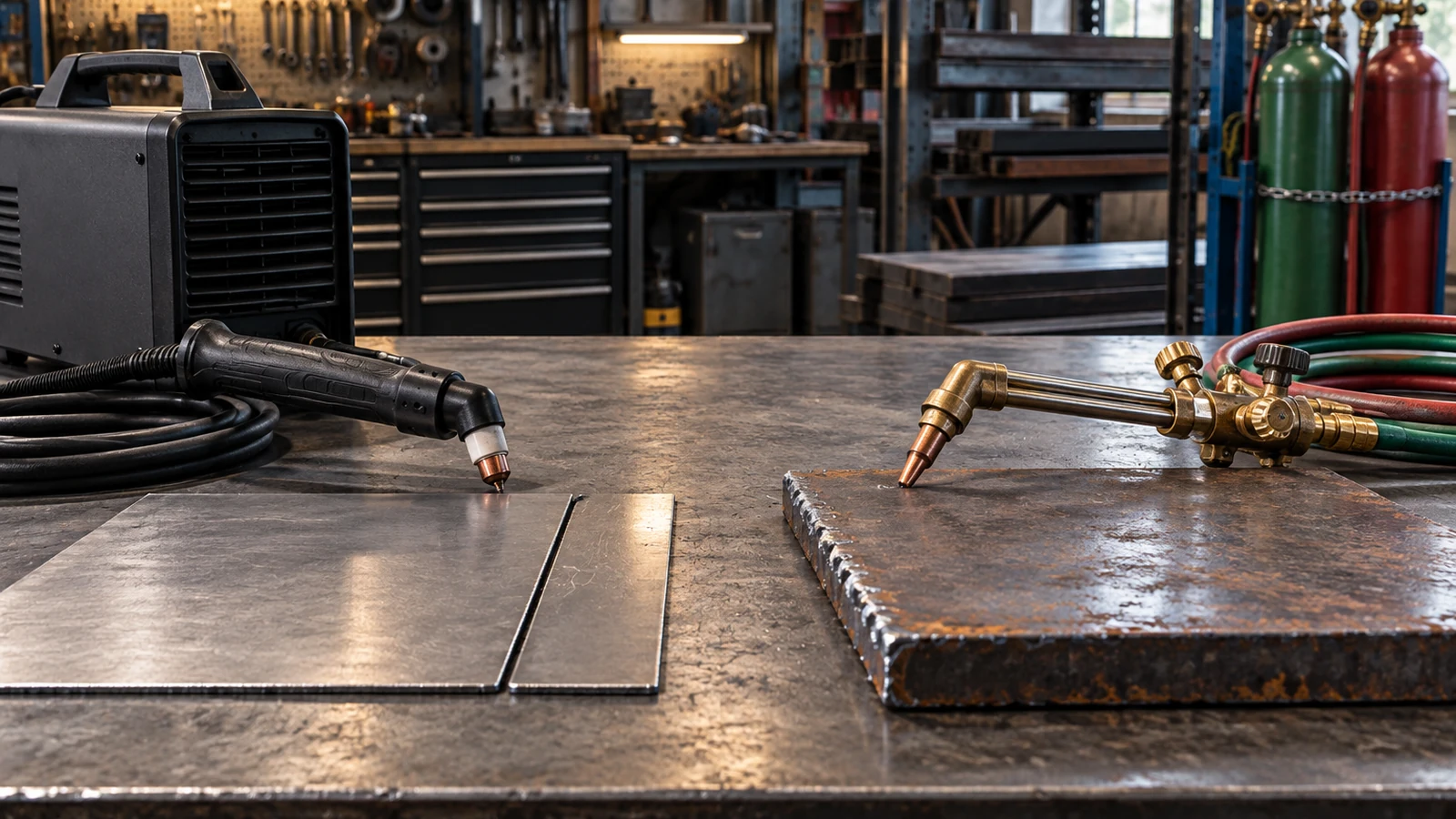
Choose a plasma cutter for thin to medium metal, stainless steel, aluminum, and relatively clean, controlled cuts. Choose oxy-acetylene if you mainly cut thick carbon steel, work where electricity and compressed air are unavailable, or also need a torch for heating and bending. Neither wins every job: your metal, thickness, available utilities, and safety setup matter more than the sticker price of either tool.
Plasma cutter vs. oxy-acetylene at a glance
| Decision factor | Air plasma cutter | Oxy-acetylene cutting torch |
|---|---|---|
| Best fit | Sheet, plate within the machine’s rated capacity, frequent accurate shapes | Thick carbon steel, field repair, heating and bending work |
| Metals | Conductive metals, including mild steel, stainless steel, and aluminum | Conventional oxygen cutting primarily suits readily oxidized steel; not the normal method for stainless or aluminum |
| Utilities | Suitable electrical supply plus clean, dry compressed air on most machines | Oxygen and appropriate fuel-gas cylinders, regulators, compatible hoses and cutting equipment |
| Cut quality | Usually narrower kerf and smaller heat-affected area in sheet and moderate plate | Usually larger heat input; a skilled operator can still make useful cuts |
| Remote jobs | Check power, generator capability and compressor capacity first | Does not need mains electricity, but cylinders add handling and transport requirements |
| Other uses | Cutting; some properly equipped systems support gouging | Cutting, heating, brazing and some gas welding with the correct attachments |
Fast rule: A home fabricator cutting 16-gauge steel and occasional stainless brackets will usually get more cutting utility from plasma. A farm repair crew removing heavy carbon-steel sections without reliable power may favor oxy-fuel. A shop doing both repeatedly may need both processes rather than a forced compromise.
Why the two tools behave so differently
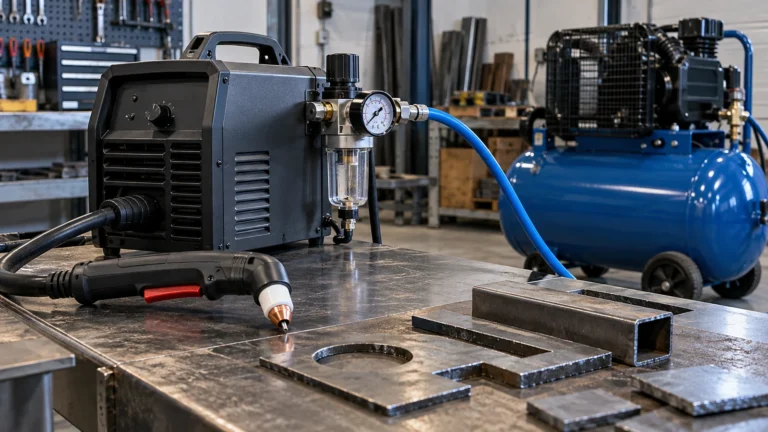
A plasma cutter uses an electrically energized, constricted gas stream to melt a narrow path through conductive metal and blow the molten material away. It is not simply a hotter version of a flame torch. Most handheld air-plasma machines need a suitably rated electrical circuit and clean, dry compressed air; a minority have a built-in compressor.
Oxy-acetylene cutting heats suitable steel, then uses cutting oxygen to support rapid oxidation and remove metal from the cut. That chemical reaction is why conventional oxy-fuel cutting is effective on carbon steel but is not an interchangeable substitute for air plasma on aluminum or stainless steel. A torch can heat or braze other metals, but heating a material is not the same as oxygen-cutting it.
Metal type and thickness: what actually changes the answer?
Thin steel and projects where appearance matters
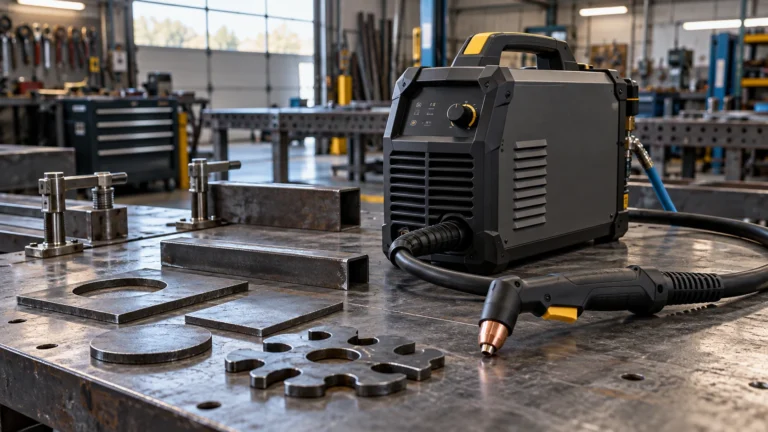
For patch panels, decorative signs, brackets, and sheet-metal patterns, plasma normally gives you a narrower kerf and less time spent heating the surrounding steel. That tends to reduce distortion, although workholding, technique, amperage, travel speed and material condition still affect the result. A plasma cut can have dross or an angled edge; it is not automatically finish-ready.
Thick carbon-steel plate and demolition work
Oxy-fuel remains useful when sections are thicker than a small air-plasma machine’s quality-cut rating. Heavy-plate cutting depends on the correct torch, tip, gas supply and trained operation. A plasma unit labeled with an impressive maximum severance thickness may only part a plate slowly with substantial edge cleanup. Do not treat a severance claim as the thickness for repeated production-quality cuts.
There is no universal crossover at 1/2 inch or 1 inch. Industrial high-current plasma machines cut thick steel, while oxy-fuel torches can also be used on thinner steel under the right conditions. Compare the actual material and desired finish with the specific manufacturer’s recommended cut capacity and cut-speed chart, not a generic technology winner.
Stainless steel and aluminum
This is often the decisive question. If your work regularly includes stainless or aluminum, choose a plasma system rated for those metals, or use an appropriate mechanical cutting process. Conventional oxy-acetylene oxygen cutting is not the usual way to sever either material. Remember that air-plasma cut edges may need preparation before critical welding: edge oxides, nitrides and cleanliness can affect downstream work.
The hidden cost is the setup you do not already own
Comparing the price of a plasma box with a torch handle is misleading. The full system matters, including the parts that keep it operating safely and consistently.
- For plasma: check electrical input at the amperage you expect to use, branch-circuit requirements, compressor delivered airflow at the required pressure, air filtration or drying, torch consumables and service support. A low-cost machine is not economical if it requires an unplanned compressor or circuit upgrade.
- For oxy-acetylene: account for both cylinders, legitimate local fills or exchanges, cylinder storage and transport, correct regulators and hoses, manufacturer-required reverse-flow or flashback protection, cutting tips, and recurring gas cost. An outfit advertised as a “complete torch kit” may not include cylinders.
- For either: budget for eye and face protection appropriate to the process, fire-safe workholding, local exhaust or ventilation measures, and cleanup tools. These are not optional add-ons just because an online bundle looks complete.
Practical example: A buyer already running a properly sized dry-air system in a 240 V shop is closer to productive plasma cutting than a buyer with only a small tire-inflation compressor. Conversely, a crew with a compliant oxygen-fuel setup and secure cylinder logistics may have a sensible reason to stay with a torch for intermittent thick-steel work.
Portability does not mean the same thing for both systems
A handheld plasma power source can be light enough to carry in one hand, but it may still depend on a heavy compressor, adequate circuit and safe work return. Some integrated-compressor models remove the separate air hose but still need sufficient input power and have their own capacity limits. Never assume a household receptacle can supply full advertised machine output; follow the exact machine and electrical installation instructions.
Oxy-fuel cutting avoids electric service for the cutting process. That advantage comes with two pressurized gas supplies, cylinder securing, regulator compatibility, equipment inspections and transporting cylinders under applicable rules. If cylinders cannot be safely stored or supplied where you work, “off-grid” is not an automatic win.
Three concrete equipment examples, not universal winners
These are examples of what to evaluate on Amazon.com, not claimed hands-on test results. Confirm the exact listing variant, included components and current offer before purchasing. The manufacturer documents, rather than a marketplace title alone, should settle input power, cutting capacity and safety requirements.
PrimeWeld CUT60: a shop-oriented air-plasma choice
PrimeWeld lists the CUT60 as a dual-voltage air-plasma system with a PT60-style blowback torch. It can serve a fabricator who makes regular cuts in conductive metal and already has a suitable electrical supply and an adequately rated clean-air source. The manufacturer publishes separate generation manuals, so check which generation and torch configuration the Amazon listing actually supplies before buying spare parts.
Skip it if: you cannot meet its documented power or compressed-air requirements, or if your regular plate thickness exceeds the manufacturer’s acceptable quality-cut capacity. Its listed capabilities are not permission to improvise wiring or use unapproved adapters.
Inspect PrimeWeld CUT60 on Amazon
Hobart 770502: a medium-duty oxy-fuel outfit for steel work
Hobart’s 770502 is a cutting and welding torch outfit intended for jobs such as light fabrication and general repair. Hobart specifies included torch components, twin hose, regulators and built-in reverse-flow check valves. It also distinguishes the capacity achievable with included tips from higher figures that require optional tips. Do not mistake check valves for automatically sufficient flashback protection: follow the outfit manual and the applicable safety requirements.
Skip it if: you mainly cut stainless or aluminum, cannot arrange compliant gas cylinders and storage, or need fine repeatable thin-sheet profiles. Confirm whether cylinders are excluded from the specific offer.
Inspect Hobart 770502 on Amazon
Forney 1707: a different oxy-fuel kit for heating as well as cutting
The Forney 1707 is a medium-duty cutting, welding and heating outfit. Forney’s item sheet lists a cutting attachment, welding tips and a heating nozzle, making it worth considering when the additional heating functions are a genuine part of the buying decision. It is an outfit rather than a license to use any tip or fuel; match regulators, fittings, tips and safety devices to the manufacturer’s instructions.
Skip it if: you want one fast tool for mixed-material sheet cutting or have not accounted for separate cylinders, compatible safety equipment and gas supply.
Among these examples, choose the PrimeWeld CUT60 for appropriate air-plasma work, not because it can replace every torch. Choose the Hobart 770502 for a cutting-focused oxy-fuel outfit, or the Forney 1707 if the specified heating and welding attachments are useful. For an unpowered field job involving heavy carbon steel, neither a small plasma cutter nor an incomplete gas kit solves the entire problem.
Five checks to make before spending money
- List your actual metal mix. Mild steel only? Add stainless or aluminum? If so, conventional oxy-fuel cutting drops out as the all-purpose answer.
- Separate everyday thickness from the rare worst case. Size the machine or torch around common jobs and documented quality-cut conditions, not occasional severance marketing.
- Audit what you already have. For plasma, verify the circuit and delivered air. For gas, verify compatible cylinders, fill access, storage and approved protective devices.
- Choose your finish standard. Decorative curves, tight-fit fabrication parts and weld-prep edges favor controlled plasma cutting in its capacity range. Rough separation of heavy steel can favor oxy-fuel.
- Check the complete bill of materials. Torch, tips, electrodes, nozzle orifice, consumable fit, hoses, gas accessories, PPE and fire protection. Model revisions and optional tips can change what is included.
Still unsure? Take three representative jobs and check each process against material, quality-cut thickness, utilities and safety constraints. If one process fails on a frequent job, do not buy it just because its headline price is attractive.
Safety limits that can override either recommendation
Both methods create hot metal, sparks, harmful airborne contaminants, intense light and fire hazards. Plasma also adds electrical-shock and arc-radiation risks; oxy-acetylene adds flammable gas, high-pressure oxygen and flashback risks. Neither should be used near unprotected combustibles, on unknown coated material, or inside a tank or confined space without the required hazard controls and qualified procedures.
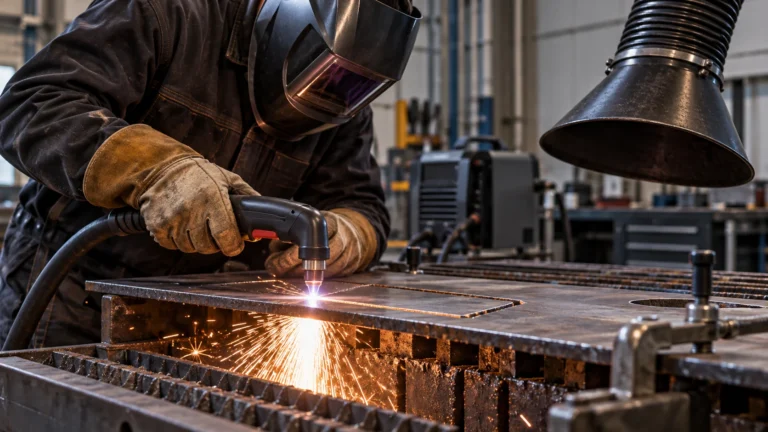
- Before plasma cutting: verify proper electrical installation and work-return connection; keep equipment dry; use the eye, face, hand and body protection specified for plasma arc cutting; control fumes at the source where practical. Do not bypass torch interlocks or guards.
- Before oxy-fuel cutting: use trained handling, secured cylinders, compatible regulators/hoses and manufacturer-approved protection against backflow and flashback; never use oxygen to blow off clothes, work surfaces or provide ventilation. Inspect and maintain equipment as the outfit manual directs.
- For both: clear or shield combustibles, provide appropriate fire-watch arrangements where required, and assess material coatings before heating. OSHA 29 CFR 1910.252 and 1910.253 describe important U.S. workplace requirements; their exact applicability depends on the workplace.
Stop the job if cylinder condition or connections are questionable, combustible residues or unknown coatings may be present, ventilation is inadequate, the circuit or air source cannot meet the machine specification, or the work area cannot be protected from fire. Choosing a different cutter is not a substitute for fixing the hazard.
Frequently Asked Questions
Can you cut aluminum or stainless steel with an oxy-acetylene torch?
Not by conventional oxy-fuel cutting in the way you cut mild steel. These metals do not support the same normal oxygen-cutting reaction. A properly rated plasma system is generally the more suitable of these two processes for cutting them.
Is plasma always better for 1/2-inch steel?
No. A plasma machine’s clean or recommended cutting capacity, available power and air, desired edge quality and frequency of work determine whether it is a good fit. An oxy-fuel torch can be practical for carbon-steel sections where a small plasma machine is near its limits.
Can a plasma cutter work without an air compressor?
Most handheld air-plasma cutters require an external compressor supplying the manufacturer’s specified clean, dry airflow. Certain models include a built-in compressor, but still require electrical power and have their own performance limits.
Does a torch kit include the oxygen and acetylene tanks?
Not necessarily. “Outfit” may mean regulators, hose, torch and tips without cylinders. Inspect the exact listing’s contents and arrange approved cylinder supply, secure storage and handling before buying.
Which should you buy first?
For a typical garage metalworking setup with suitable power and clean air, start with plasma if your projects involve light plate, sheet metal, stainless or aluminum and you care about repeatable cutting. Start with oxy-acetylene when thick carbon steel, remote operation, and heating or bending are your recurring needs and you can support a safe cylinder setup. Buy neither until you can meet the essential utility and hot-work safety requirements.
If the plasma route fits, check the PrimeWeld CUT60 listing and exact revision. If a gas outfit fits, compare the Hobart 770502 with the Forney 1707 according to the included heating equipment and your actual steel work, not an unsourced “best” badge.