
GearAndSteel is reader-supported. As an Amazon Associate I earn from qualifying purchases. When you buy through links on our site, we may earn an affiliate commission, at no extra cost to you. Learn more.
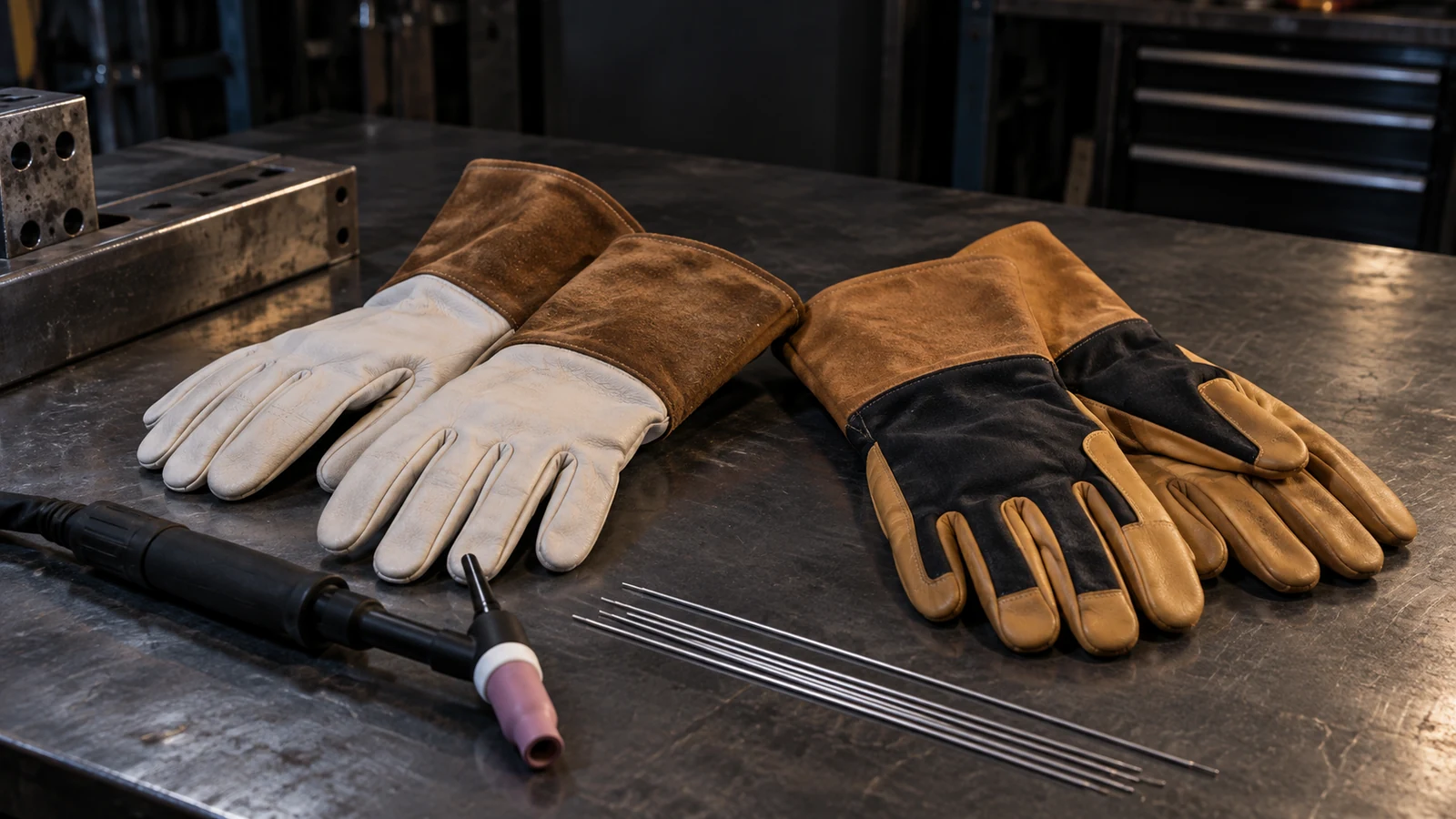
The best TIG welding gloves are the ones that let you feed filler rod without exposing your hands to unnecessary heat, sparks, or UV. For most bench TIG work, the unlined goatskin Tillman 1338 is a sensible first choice. Consider Lincoln Electric K2981 if palm feel and a conventional full-leather build appeal more, Black Stallion T50 for a reinforced, mixed-material design, or Tillman 30 if you prefer pigskin. Match the glove to your actual heat exposure and hand size before ordering.
A TIG glove should not feel like a bulky MIG gauntlet, but it is still protective equipment, not a disposable precision accessory. Thin leather gives you more control of a narrow filler rod; it also leaves less margin when you work close to hot metal for extended periods. None of the four models below is a substitute for proper torch technique, appropriate sleeve coverage, safe workholding, and a helmet with the correct filter shade.
Best TIG gloves at a glance
Tillman 1338
Unlined goatskin, reinforced thumb, side GlidePatch, and a 4-inch leather cuff make this the most balanced design here for regular filler-rod work.
Lincoln Electric K2981
Goatskin construction with a padded yet unlined palm, strengthened seams, and a 4-inch split-cowhide cuff.
Black Stallion T50
Goatskin palm and fingers, FR cotton back, and a side DragPatch. The mixed-material build is a meaningful trade-off, not a universal upgrade.
Tillman 30
Unlined top-grain pigskin with a full leather cuff. Worth considering if you like its feel or work in a shop where gloves pick up incidental oil or moisture.
How these picks were selected: manufacturer descriptions and US product listings were checked against specific model families. These are researched recommendations, not hands-on rankings. Current Amazon offers, available sizes, and sellers can change; verify the exact variant at checkout.
Compare the four glove designs
| Glove | Hand material and feel | Distinctive construction | When to pass | Amazon |
|---|---|---|---|---|
| Tillman 1338 | Unlined top-grain goatskin | GlidePatch, thumb reinforcement, 4-inch split-cowhide cuff | You need a heavier glove for prolonged high-radiant-heat work | Check model and sizes |
| Lincoln Electric K2981 | Soft goatskin, padded unlined palm | Reinforced thumb, Kevlar-stitched seams, 4-inch split-cowhide cuff | You specifically want a side drag patch | Check model and sizes |
| Black Stallion T50 | Goatskin palm with FR cotton back | DragPatch and wrapped finger protection; design revision matters | You want leather across the entire back of the hand | Check model and sizes |
| Tillman 30 | Unlined top-grain pigskin | Straight thumb and 4-inch split-cowhide cuff | You prefer goatskin’s particular feel for fine rod control | Check large-size listing |
This is a construction comparison, not a chart of certified heat resistance. The cited product pages do not establish directly comparable contact-heat, cut, or arc-flash ratings across all four models. Do not treat a reinforced patch, Kevlar thread, or leather cuff as proof of a specific protection rating.
Which TIG welding glove should you choose?
Tillman 1338: familiar TIG feel with useful reinforcement
Choose it when rod control matters but you also expect regular torch-side abrasion.
Many TIG gloves trade away hand protection in the name of fingertip sensitivity. The 1338 does not solve the heat problem, but it makes a practical compromise: an unlined leather hand for filler-wire handling, then reinforcement where the side of a glove may rub along a surface. That side patch is more relevant to someone who braces or slides the torch hand than to someone who holds it entirely clear of the bench.
Limitation: it is not a high-heat handling glove. If your fingers become uncomfortably hot while welding, do not assume the reinforcement makes continued exposure safe. Change the process setup or select protection suited to the actual hazard. The referenced Amazon page includes size options; check the chosen variant rather than assuming the default ASIN corresponds to your size.
Good fit if you want
- Thin full-leather finger feel and a conventional gauntlet cuff.
- A manufacturer-documented side wear patch.
Skip it if you need
- Documented high contact-heat or cut protection beyond this listing’s stated construction.
- One glove for TIG and prolonged hot-part handling.
Lincoln Electric K2981: padded palm, traditional leather protection
The better first look if you want lightweight goatskin with a lightly padded palm instead of a specific side-wear patch.
Some shoppers assume an unlined glove must have an entirely unpadded palm. The K2981 is a useful counterexample: its listed palm design adds padding without turning the whole hand into a lined heavy-duty gauntlet. That may appeal to someone who spends long stretches positioning the torch and handling light shop components between welds. It is a design distinction, not measured evidence that one glove feels better on every hand.
Limitation: a padded palm can feel less direct than a thinner unpadded construction. Do not equate the K2981’s protective cuff with permission to rest the glove on hot work. Amazon lists the K2981 family with selectable sizes; match the product code and your hand measurement before purchasing.
Good fit if you want
- Traditional full-leather construction without a bulky full lining.
- A padded palm with a lightweight, flexible hand.
Skip it if you need
- A confirmed side-of-hand drag patch.
- Specialized cut protection or a documented contact-heat rating.
Black Stallion T50: goatskin control with an FR cotton back
Consider it when you specifically want the feel of goatskin fingers and a reinforced hybrid glove, rather than full leather across the back.
This is the outlier in the group. A fabric back changes the feel and construction from an all-leather TIG glove. Some buyers may appreciate a less substantial back-of-hand feel, while others will prefer leather coverage. Neither preference establishes equivalent heat protection. For close work around intense radiant heat, evaluate the whole hand, cuff and sleeve system rather than shopping by dexterity alone.
Revision note: Black Stallion describes a recently improved T50. Existing Amazon listings may show different imagery or packaging from the newest manufacturer page. Compare the seller’s photographs and construction with the current specification, especially the cuff and finger wraps, before assuming you are receiving the latest version.
Good fit if you want
- Unlined goatskin palm plus documented side reinforcement.
- A mixed leather and FR-cotton construction.
Skip it if you need
- An all-leather back or a version-specific feature the listing does not confirm.
- A universal glove for higher-heat MIG or stick conditions.
Tillman 30: an unlined pigskin hand for TIG work
Worth considering when pigskin feel and the manufacturer’s stated resistance to incidental oil and moisture matter more than a dedicated side patch.
Tillman describes this pigskin as naturally resistant to oil and water, but that is a material characteristic, not permission to weld in wet or contaminated gloves. Keep PPE dry and free from flammable contamination. The choice here is mostly about handling preference and shop environment. If goatskin has not felt right on your hand, the 30 gives you a different leather without abandoning the TIG-style unlined construction.
Limitation: the 30 lacks the 1338’s named GlidePatch design. If frequent bench-edge contact is wearing through your glove, consider whether a reinforced model better targets the wear pattern. The linked Amazon ASIN is a large-size listing; do not order it solely because another size of Tillman 30 fits you.
Good fit if you want
- Unlined pigskin and a full leather cuff.
- An alternative feel to goatskin gloves.
Skip it if you need
- The named GlidePatch or DragPatch feature.
- Moisture-proof, electrically insulating, or high-contact-heat rated protection.
How to choose TIG gloves without giving up necessary protection
Start with the heat exposure, not the leather name
A thin, unlined TIG glove is most persuasive for controlled precision work where filler-wire feel is important. It becomes a poor choice if you must keep a hand next to substantial radiant heat or handle recently welded material. The required level of protection depends on the actual task, workpiece temperature, position, and exposure. Product copy that says only “heat resistant” does not establish a rating that lets you compare gloves safely.
If your glove becomes painfully hot, scorches, stiffens, tears, or allows heat through a worn spot, stop the task. Let parts cool and use appropriate tools for handling them. A glove sold for TIG precision is not a substitute for heat-handling tongs or properly selected heavier protection. Similarly, ordinary welding leather gloves are not rated electrical insulating gloves. Follow the machine’s electrical safety instructions and never handle live conductors because you are wearing leather.
Check the real dexterity problem
If filler rod catches at the fingertips, look at finger length, seam position and whether the glove bunches at the palm when you bend your fingers. If your torch hand drags against the bench, a documented side patch may solve a different problem than softer leather. If your palm feels uncomfortable holding a torch, the K2981’s padded unlined palm is a construction worth comparing. Those issues have different remedies; buying the thinnest possible glove can make one of them worse.
Fit the glove, then inspect the cuff and sleeve overlap
Manufacturers’ size charts matter more than a generic small/medium/large label. Measure according to the actual brand chart, then try forming a fist and feeding a filler rod with the new gloves in a safe, non-welding setting. Excess fingertip length reduces control; tight seams can restrict motion. Your gloves should cover the wrist and interface appropriately with flame-resistant protective sleeves or a jacket so no skin is exposed to the arc.
Check seams, holes, stiff spots and contamination before use. Do not depend on an unverified manufacturer’s claim that a particular glove is cut-rated or suitable for electric arc-flash hazards; those are different evaluations from ordinary TIG welding suitability. Verify any required performance ratings with the product’s actual documentation and your workplace hazard assessment.
Keep two tasks separate: making the weld and handling hot steel
One of the more useful purchasing decisions is to avoid forcing a precision TIG glove to handle everything in the shop. A thin glove can be your welding-hand protection if the task’s hazards permit it, while hot workpiece movement may require a different rated glove or handling tool after welding stops. Do not swap gloves near exposed rotating machinery; follow that equipment’s separate PPE rules, which can prohibit gloves near entanglement hazards.
Where TIG gloves fit in the full PPE system
Gloves address hand burns and some abrasion exposure. They do not shield the eyes from TIG arc radiation, protect uncovered forearms, or control welding fumes. Use an appropriate welding helmet and primary eye protection, full skin coverage, suitable footwear, and the ventilation or local exhaust measures required for your material and workspace. OSHA’s welding and hot-work guidance treats hand, eye and clothing protection as complementary controls, not substitutes for each other.
Spatter may be less prominent in a well-controlled TIG operation, but it is not the only hazard. Torch proximity, hot filler stubs, reflected heat, sharp sheet edges and contaminated surfaces all matter. In particular, do not weld unknown coatings or suspect metals until the appropriate exposure controls have been determined. For workplace compliance, follow the rules applicable to your particular operation rather than treating any single retail glove as universally compliant.
The buying decision
Start with Tillman 1338 for routine precision TIG if its size fits and the job’s heat exposure is appropriate. Its side patch is a practical differentiator. Choose Lincoln K2981 if you prefer the combination of an unlined padded palm and full-leather build. Choose Black Stallion T50 only after verifying which construction revision the seller supplies; choose Tillman 30 if pigskin is the better fit for your hands and conditions. If your work routinely overheats thin gloves, none of these is the right answer without reassessing the task and protective equipment.
Frequently Asked Questions
Are goatskin gloves better than pigskin for TIG welding?
Not in every shop. The goatskin models here are promoted for dexterity, while Tillman positions its pigskin model 30 as soft, breathable and naturally resistant to incidental oil and moisture. Fit, seam placement, heat exposure and the condition of the glove matter more than assuming one leather is universally superior.
Can I use thin TIG welding gloves for MIG or stick welding?
Do not assume they are interchangeable. MIG and stick tasks may involve substantially different spatter, slag and radiant-heat hazards. Select gloves for the process and actual exposure using manufacturer documentation and workplace requirements. A thin TIG glove that becomes hot or damaged is a reason to stop, not to continue with reduced protection.
Should TIG welding gloves have a four-inch cuff?
Several models compared here use a manufacturer-documented 4-inch split-cowhide cuff, which provides additional wrist coverage. A cuff length by itself does not guarantee complete protection: the glove must fit properly and overlap compatible protective sleeves or clothing without leaving exposed skin.
Do Kevlar-stitched TIG gloves provide electrical shock protection?
No. Kevlar thread is used for seam strength and resistance to heat-related seam damage, not to certify the glove as electrically insulating. Ordinary leather TIG gloves should not be treated as voltage-rated gloves. Follow your welding power source’s electrical safety procedures, keep gear dry, and avoid contact with energized parts.