
GearAndSteel is reader-supported. As an Amazon Associate I earn from qualifying purchases. When you buy through links on our site, we may earn an affiliate commission, at no extra cost to you. Learn more.
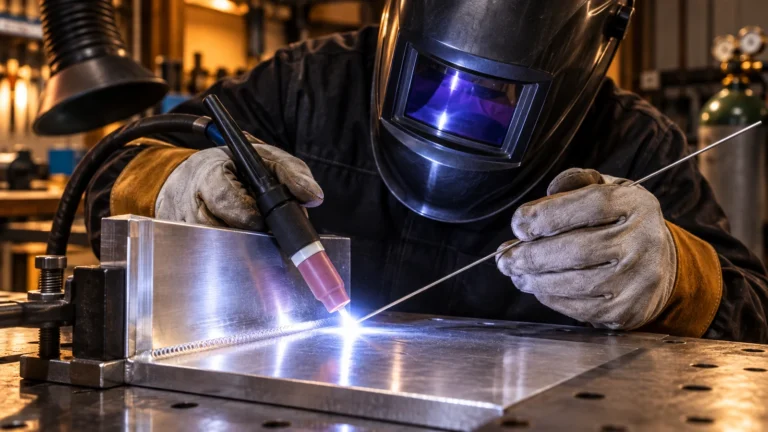
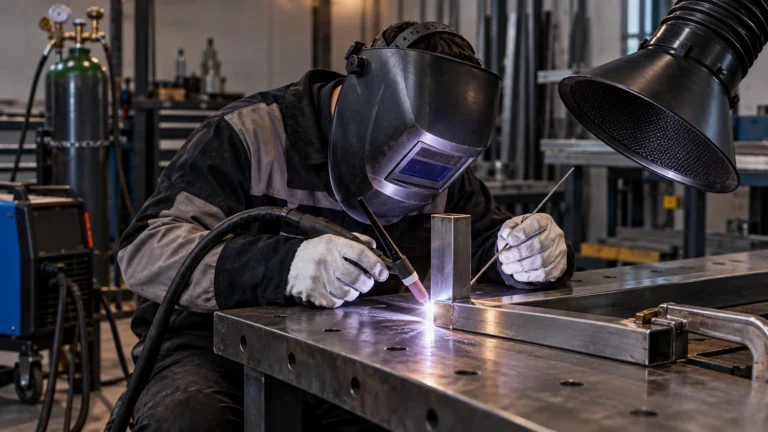
The best TIG welder for aluminum is an AC-capable machine with adjustable AC balance and enough output for your actual joints, not simply the highest amperage printed on a case. The PrimeWeld TIG225X is the strongest general-shop choice here if its Amazon bundle matches your needs. Choose the ARCCAPTAIN TIG200P AC/DC if you want portable, multi-waveform control, or the YESWELDER TIG-200P ACDC if a readable digital interface matters more. All three still require a suitable electrical supply, argon and correct protective equipment.
These are specification-based recommendations, not hands-on test results. The exact Amazon listing, the latest manufacturer configuration and the accessories shipped with a machine can differ. That difference is especially important for aluminum TIG, where buying the wrong power-source version can leave you with DC-only TIG or without a compatible amperage control.
Quick picks for aluminum TIG work
- Best all-around garage setup: PrimeWeld TIG225X. Manufacturer-rated 225 A TIG output, adjustable AC balance and frequency, and a listing that explicitly names the CK17 Flex torch. Choose it for a stationary workspace with appropriate input power. Check the exact TIG225X bundle on Amazon.
- Best compact feature-focused alternative: ARCCAPTAIN TIG200P AC/DC. AC/DC TIG with pulse and selectable square/triangular AC modes in the manufacturer’s description. Choose it if portability and controls are your priorities, after confirming the correct foot-pedal package. View the TIG200P AC/DC Amazon listing.
- Best for a large digital display: YESWELDER TIG-200P ACDC. A 200 A-class AC/DC listing with pulse TIG and a large display. Choose it for a screen-led interface, but do not confuse this listed version with the newer TIG-200P ACDC PRO. Inspect the listed YESWELDER variant on Amazon.
Short answer for thick aluminum or long uninterrupted welds: do not choose solely from the advertised maximum amperage. Read the duty-cycle rating at the current you will actually use, confirm the required input circuit, and consider a higher-duty-cycle setup or professional shop if the job exceeds your machine and torch ratings.
Aluminum TIG welder comparison: the differences that matter
| Exact Amazon-listed machine | Published aluminum-relevant capability | Best reason to choose | Verify before ordering | Amazon |
|---|---|---|---|---|
| PrimeWeld TIG225X, CK17 listing | AC/DC TIG; up to 225 A as described in maker specifications; adjustable AC controls | Traditional shop-oriented setup and named CK torch bundle | Gen 1 versus Gen 2, torch model, included pedal, available branch circuit | Check listing |
| ARCCAPTAIN TIG200P AC/DC | 200 A-class AC/DC TIG with pulse and square/triangle waveform options | Compact alternative with several aluminum-relevant control modes | Pedal sold separately in some packages; torch and connector details | Check listing |
| YESWELDER TIG-200P ACDC, standard listing | 200 A-class AC/DC TIG, pulse, digital display | Readable controls for parameter changes | Standard versus PRO revision; verify actual pedal and accessory bundle | Check listing |
Important comparison limit: maximum output is not a head-to-head test of real weld penetration. Ratings are taken from manufacturer and Amazon product descriptions for particular model families, not from identical independently controlled duty-cycle or welding trials. The comparison intentionally avoids universal aluminum thickness claims.
Three aluminum TIG welders worth comparing
PrimeWeld TIG225X: the most complete shop-first choice
PrimeWeld’s current TIG225X specification lists 120/240 V input, TIG output up to 225 A, adjustable AC balance and AC frequency, and foot-pedal support. The Amazon ASIN used here is more specific: its title identifies a TIG225X supplied with a CK Worldwide 17 Series Superflex torch. That can matter more than a few additional settings because a comfortable, serviceable torch and flexible lead are used on every joint.
Best for: a garage or fabrication bench that works with aluminum regularly and wants a known torch bundle. The manufacturer describes the current TIG225X with 40% duty cycle at maximum TIG output and 100% at 155 A on 240 V, but the current Gen 2 manufacturer data should not be assumed to describe every older Amazon listing. Check the exact hardware revision and manual shipped with the ASIN before using those figures in a buying decision.
Reason to pass: your work is mainly off-site and weight matters, or your existing electrical installation cannot safely support the input required for the amperage you expect. The manufacturer’s newest TIG225X configuration has updated features that may not match the Amazon CK17 package. Treat the bundle’s torch choice, pedal, warranty coverage and machine generation as items to confirm, not assumptions.
Check PrimeWeld TIG225X model and bundle on Amazon
ARCCAPTAIN TIG200P AC/DC: choose it for controls and portability
The ARCCAPTAIN TIG200P AC/DC is positioned as a compact aluminum-capable TIG/stick power source. Its maker documents AC square and triangular modes, pulse variations, 2T/4T/spot control options and foot-pedal compatibility. The manufacturer describes a 26.5 lb unit. Those are meaningful differences for a hobby fabricator who moves a welder between benches and wants to learn what waveform and balance adjustments do.
Best for: a small shop that values a feature-rich compact machine over the highest published output. A key trap is accessory packaging. ARCCAPTAIN sells the base machine and a separately identified foot-pedal kit; an Amazon listing for the machine must not be read as a guarantee that the pedal is in that specific box. Check torch connection, consumables compatibility and current availability against the ASIN before checkout.
Reason to pass: you need a documented long high-current duty cycle for repeated production beads, and cannot verify the rating for the exact machine revision. Additional welding modes do not replace electrical capacity or correct fume control.
Check ARCCAPTAIN TIG200P AC/DC on Amazon
YESWELDER TIG-200P ACDC: a display-centered choice with a version warning
The Amazon page identifies the YESWELDER TIG-200P ACDC AC/DC aluminum TIG machine with a large LED display and pulse modes. For a buyer learning to change parameters between small repairs, a clear panel may be preferable to a dense bank of controls. The important catch is that YESWELDER also advertises a newer TIG-200P ACDC PRO with its own technical sheet and selectable bundles.
Do not apply the PRO page’s documented duty cycle, waveform choices, torch fittings or included items to the older non-PRO Amazon ASIN without confirmation. A nearly identical product name is not evidence of identical electrical or torch specifications. Ask the seller for the exact manual and verify AC TIG capability, pedal compatibility and the included package against the product photograph and SKU.
Best for: a buyer who prefers digital readouts and occasional aluminum TIG projects. Reason to pass: you require the revised PRO features or cannot confirm exactly which version Amazon is selling. Buy the specified machine, not a feature list copied from a newer generation.
How to choose an AC/DC TIG welder for aluminum
1. Confirm real AC TIG output, not just a TIG label
For routine TIG welding on aluminum, choose a machine with the AC TIG process. AC balances oxide-cleaning action during electrode-positive time with base-metal heating during electrode-negative time. A welder advertised as “TIG/stick” can be DC-only; a pulse function does not turn DC TIG into AC TIG. This is the first filter, before price, display size or brand familiarity.
2. Match the input circuit before believing the output number
Dual-voltage input is useful, but an adapter does not make a household 120 V branch circuit perform like a properly installed 240 V circuit. Published high-end TIG output often assumes the higher input voltage. Verify the manual’s input current, connector and overcurrent-protection requirements for your exact machine revision, and have a qualified electrician evaluate an uncertain branch circuit. Never defeat grounding or improvise plugs to get more power.
3. Read duty cycle at the amperage that matters
Duty cycle states how much of a specified reference period the welder can deliver a stated output under the maker’s test conditions, typically expressed as a percentage. A claimed 200 A peak tells you little about repeated long welds unless it is paired with a usable duty-cycle rating. For example, 35% at 225 A and 60% at 200 A describe different loads, not a ranking of machines. Also consider torch cooling limits and how long the joint retains heat.
4. Understand AC balance and frequency rather than chasing pulse numbers
More electrode-positive time can help oxide cleaning but adds heat load to the tungsten; electrode-negative time provides penetration. Some controls display percent EP, while others display percent EN. That means “70% balance” can mean different things on different machines. Follow the actual manual’s definition rather than copying a single setting from another brand. AC frequency changes arc concentration and feel, but it cannot correct dirty aluminum or poor joint preparation by itself. Pulse is an optional control, not a substitute for AC output.
5. Check the cost and compatibility of the working setup
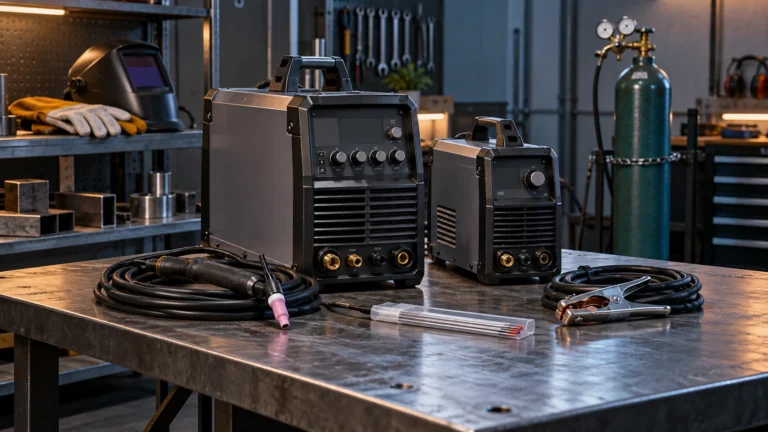
Before comparing packages, account for a suitable welding helmet and protective clothing, correctly secured argon cylinder, compatible regulator and hoses, machine-approved foot pedal, tungsten, properly selected aluminum filler, clamps and effective fume capture. Different torch families and control connectors are not automatically interchangeable. Check the bill of materials against the seller’s exact variant, and use filler recommendations that match the base alloy and service requirements.
Choose by your actual aluminum projects
Occasional brackets, small noncritical repairs and learning: start with the supported AC TIG process, pedal controls you understand, dependable workholding and verified electrical input. If the budget does not cover ventilation, PPE and argon, postpone the machine purchase rather than cutting the safety setup.
Thin sheet and visible cosmetic seams: prioritize accurate low-end output control, predictable starting and a compatible foot pedal. A high maximum amperage does not help if the machine cannot be controlled at the low end. The quality of fit-up and clean material is just as important as panel features.
Long seams or heavier sections: investigate duty cycle, your 240 V supply and torch cooling first. None of the three listed compact machines should be presented as a guaranteed substitute for industrial production equipment. Published single-pass material claims depend on alloy, joint design, preparation, technique and machine operating limits.
Structural or safety-critical work: choose procedures, materials, qualified personnel and inspection appropriate to the application. A consumer TIG purchase recommendation does not establish a qualified weld procedure for a chassis, lifting component, pressurized part or load-bearing repair.
Aluminum TIG safety checks before the first arc
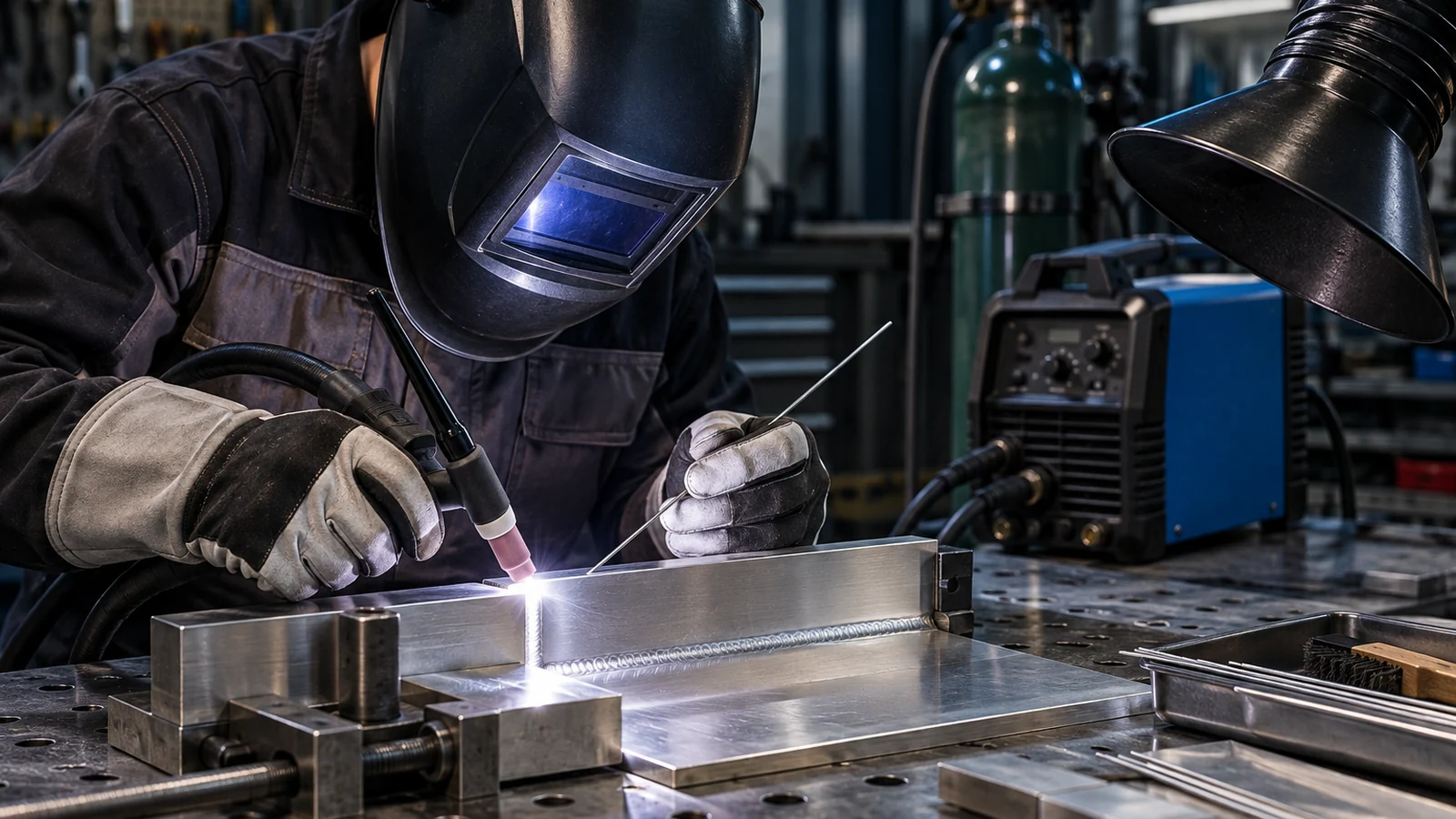
- Protect from arc radiation and hot metal. Use suitable eye/face filtering, flame-resistant coverage, gloves and screens for nearby people. The correct filter shade depends on the process and operating conditions, not the product photo.
- Control fumes at the source. Welding can produce hazardous fumes and gases even on bare-looking stock. Use adequate local exhaust and a site-specific exposure assessment; a random portable fan or a consumer mask is not a universal solution. Remove or professionally assess unknown coatings and contamination.
- Handle argon safely. Secure gas cylinders, use the correct approved regulator and connections, follow the gas supplier’s handling instructions and ensure ventilation. Shielding gas can displace oxygen in poorly ventilated spaces.
- Keep the work electrically and mechanically sound. Clamp parts securely; keep hands, torch leads and the work return arranged as the manual requires. Stop if the machine has damaged insulation, unexpected output faults, gas leaks or supply wiring problems. De-energize and refer repairs to qualified service.
- Control fire hazards. Remove or protect combustible materials and follow workplace hot-work requirements. Never weld a used fuel tank, drum or container without approved professional cleaning, hazard assessment and procedures.
These checks follow the equipment manuals and OSHA 29 CFR 1910.252’s welding and ventilation provisions. Workplace rules and the correct protection depend on the job; neither a product roundup nor a machine listing replaces a documented safe operating procedure.
Frequently Asked Questions
Can a DC-only TIG welder weld aluminum?
Specialized DC aluminum procedures exist, but for routine aluminum TIG in a home or small fabrication shop, an AC-capable TIG power source is the practical recommendation. Do not buy a DC-only stick/TIG machine assuming its pulse mode supplies AC oxide-cleaning action.
Does a 200-amp TIG welder work on a standard 120-volt outlet?
Some dual-voltage models can operate on 120 V, but their full rated TIG output usually depends on a suitable higher-voltage input. Check the exact manufacturer’s input ratings and required branch circuit. An adapter does not increase the available electrical power.
Is a foot pedal necessary for TIG welding aluminum?
A pedal is not mandatory for every approved process setup, but variable amperage control is valuable when the part heats during a bead. Confirm that the welder supports the pedal’s connector and control type, and that the chosen Amazon bundle actually includes it.
What shielding gas should I plan for with an aluminum TIG welder?
Pure argon is a common starting gas for many AC TIG aluminum applications, but the exact gas and flow requirements should follow the machine, torch and welding procedure. Use the correct regulator and secure the cylinder; shielding gas cannot serve as ventilation.
Which one should you buy?
Choose the PrimeWeld TIG225X if you want an aluminum TIG machine for a dedicated shop and the CK17 Amazon bundle is the version you actually need. Select the ARCCAPTAIN TIG200P AC/DC for compactness and flexible AC modes, or the YESWELDER TIG-200P ACDC when a clear digital interface is your priority and the exact model generation is confirmed. If you cannot verify supply wiring, manual revision, duty cycle or pedal fit, do not place the order yet.
Research method: product choices are based on currently indexed Amazon.com model listings, official manufacturer descriptions and recognized welding safety guidance, not first-hand welding trials. Stock, offers and bundles may change. This page focuses on choosing an aluminum-capable machine; welding technique and general TIG welder roundups are separate topics.